Marriage records are often one of the first documents genealogists search for and for good reason. A single record can confirm relationships, locations, and timelines that might otherwise take years to piece together. But while marriage records are incredibly useful, they also have clear limits.
Understanding both what these records can and can’t tell you will help you use them more effectively and avoid common research pitfalls.
What Marriage Records Can Tell You
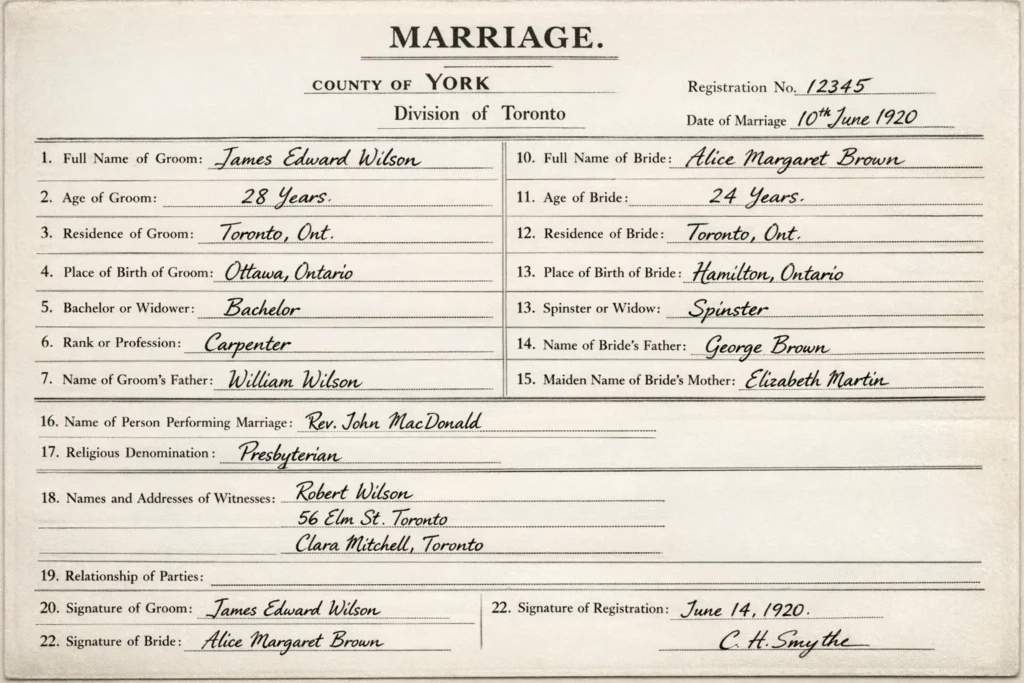
Marriage records are foundational sources in genealogical research. Depending on the time period and location, they may reveal a surprising amount of information.
Names of the Bride and Groom
At minimum, marriage records identify both parties. Some records include full legal names, middle names, or even maiden names, crucial for tracing women through generations.
Dates and Locations
The marriage date and place help anchor your ancestors in a specific time and community. This can point you toward local churches, newspapers, land records, or census entries to continue your research.
Age or Birth Information
Many marriage records list ages or birth dates, allowing you to estimate birth years and distinguish between individuals with similar names.
Parents’ Names
In some jurisdictions, especially in later records, parents’ names are included. This can be a breakthrough when linking generations or confirming family relationships.
Witnesses and Officiants
Witnesses are often relatives or close friends and may provide valuable clues about extended family members. Officiants can also indicate religious affiliation.
Proof of a Legal Union
Marriage records serve as legal proof that a marriage occurred. This is especially important when resolving questions of legitimacy, inheritance, or name changes.
What Marriage Records Can’t Tell You
Despite their value, marriage records don’t tell the whole story and it’s important not to read too much into them.
Why the Couple Married
Love, convenience, family pressure, economic necessity, marriage records are silent on motivation. Any assumptions about the emotional side of the relationship require supporting evidence from letters, diaries, or oral history.
Financial Details
You won’t find information about dowries, property agreements, or financial status in a marriage record. Those details, if they exist at all, are usually found in wills, land records, or court documents.
Personal or Ceremonial Details
Marriage records rarely describe the wedding itself. There’s no mention of attire, guest lists, receptions, or family dynamics. Newspapers or church records may help fill in these gaps.
The Quality of the Marriage
A marriage record confirms that a marriage took place but not whether it was happy, short-lived, or troubled. Divorce records, court files, and later census data often provide a fuller picture.
Using Marriage Records Wisely
Marriage records work best when used as part of a broader research strategy. Treat them as reliable factual anchors, not complete biographies. Always compare the information with other sources especially when names, ages, or parents don’t quite line up.
Errors, exclusions, and intentional misstatements do occur. Ages may be adjusted, parents left unnamed, or spellings altered. Context is everything.
Marriage records are invaluable tools for genealogists, offering critical connections between people, places, and generations. But they tell only a small part of your ancestors’ stories. By understanding their strengths and limitations, you can use these records more confidently and know where to look next to bring your family history to life.